IV WITCH
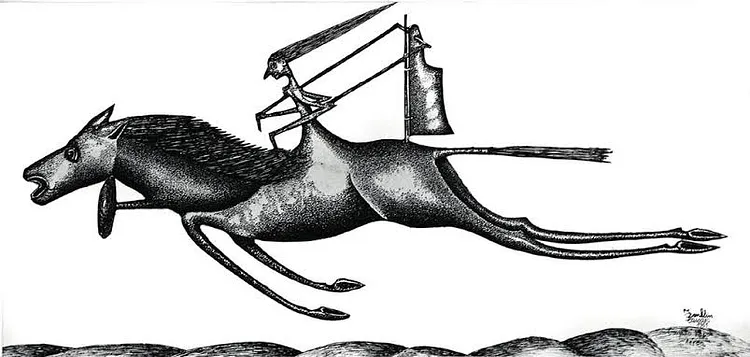
Fourth Workshop on Interdisciplinary Topics in Consequence and Hypothetical reasoning.
November 10th to 13th, 2026.
Selvino Assmann room, CFH-UFSC, Florianópolis.
The Workshop on Interdisciplinary Topics in Consequence and Hypothetical reasoning aims to bring together researchers working on logic across a variety of disciplines. The workshop’s primary focus is the rigorous exploration of consequence and hypothetical reasoning from diverse perspectives.
Our central objective is to foster a collaborative and intellectually stimulating environment, one where participants can share ongoing work, engage in forward-looking discussions, and build meaningful connections. We hope to facilitate the discovery of synergies between different methodologies and viewpoints, encouraging innovative responses to the complex challenges posed by reasoning.
We are convinced that the cross-pollination of ideas among philosophy, mathematics, computer science, linguistics, and other fields will significantly deepen our understanding of logic and its wide-ranging applications.
| General program | November 10th | November 11th | November 12th | November 13th |
| 1:30pm-2:30pm | Emily Ovalhe (UFBA): TBA | Rodrigo Bonaldo (UFSC): TBA | Rafael Ongaratto (Unicamp): TBA | Vladimir Pestov (UFSC): TBA |
| 2:30pm-3:30pm | Felipe Abrahão (Unicamp): TBA | André Luís Lindquist (UFSC): Normative models in Ethics and Political Philosophy | Mahan Vaz (Unicamp/ Ruhr-Universität Bochum): TBA | Félix Pinheiro (UFPI): TBA |
| 3:30pm-4pm | Coffee break | Coffee break | Coffee break | Coffee break |
| 4pm-5pm | Maíra Bittencourt (Unicamp): TBA | TBA | Sanderson Molick (IFPA): Expressando Abdução na Lógica de Only-Knowing | Bruna Campano (UFRN): TBA |
| 5pm-6pm | Rodrigo Stefanes (UFSC): Dynamic Ontological Restriction Logic | Faysall Farhat (UFSC): TBA | Damián Szmuc (CONICET): On all three-valued non-deterministic presentations of Classical Logic | Raoni Arroyo (UFSC) & Jonas Arenhart (UFSC): Scientific metaphysics and metaphysics of science: troubles for realist naturalism |
Abstracts
- Emily Ovalhe (UFBA): TBA
- Felipe Abrahão (Unicamp): TBA
- Maíra Bittencourt (Unicamp): TBA
- Rodrigo Stefanes (UFSC): TBA
- Rodrigo Bonaldo (UFSC): TBA
- André Luís Lindquist (UFSC): Throughout its history, Western philosophy has been pursued as a characteristically theoretical enterprise. In doing philosophy, we purport to explain the world by means of universal theories. Recently, however, under the influence of modelling practices in the sciences, some philosophers have begun to advocate the use of models in philosophy—both for investigating theoretical questions and for addressing practical ones. To investigate such questions through models is, in short, to investigate them hypothetically, by way of assumptions. This mode of inquiry, unlike investigation by means of theories, is particularist rather than universalist in character. In this talk, I examine whether it is reasonable to use normative models to investigate practical questions (ethical and political). First, drawing on Wiens’s (2025) systematization, I illustrate the range of normative models in philosophy by distinguishing between sharpening models and guiding models. I then argue that both types of normative model face what I call the Pre-Theoretical Consensus Objection. Finally, I attempt to answer this objection by appealing to a constructivist conception of models.
- TBA
- Faysall Farhat (UFSC): TBA
- Rafael Ongaratto (Unicamp): TBA
- Mahan Vaz (Unicamp/ Ruhr-Universität Bochum): TBA
- Sanderson Molick (IFPA): Este trabalho apresenta uma extensão da lógica de only-knowing (saber-apenas), originalmente proposta por Hector Levesque, por meio da introdução de um operador modal capaz de expressar o conhecimento por abdução. A proposta caracteriza o conhecimento abdutivo a partir da interação entre conceitos epistêmicos mais fundamentais e demonstra que tal caracterização é capaz de formalizar e satisfazer propriedades centrais da abdução descritas por Atocha Aliseda. Por fim, o trabalho também introduzirá extensões não monotônicas desse sistema, além de aplicações práticas no contexto do diagnóstico abdutivo.
- Damián Szmuc: Given a three-valued definition of validity, which choice of three-valued truth tables for the connectives can ensure that the resulting logic coincides exactly with classical logic? This question was recently answered for the five monotonic consequence relations 𝑠𝑡, 𝑠𝑠, 𝑡𝑡, 𝑠𝑠 ∩𝑡𝑡, and 𝑡𝑠, when the connectives are negation, conjunction, and disjunction. The answer, as it happens, relies on certain sets of valuations called Boolean normal, monotonic, falsity- and truth-collapsible. A pivotal assumption of these results is that the interpretations of the connectives are given by deterministic functions. The aim of this article is to generalize the investigation to accounts for non-deterministic interpretations of the connectives, thus leading to certain appropriate properly non-deterministic extensions of the aforementioned sets of adequate valuations.
- Vladimir Pestov (UFSC): TBA
- Félix Pinheiro (UFPI): TBA
- Bruna Campano (UFRN): A evolução da ciência física não se restringe apenas ao acúmulo de teorias, mas reflete uma mudança profunda na natureza dos seus objetos de estudo. Sob a ótica de Toraldo di Francia, fundamentada na concepção Russelliana, o objeto físico deixa de ser uma entidade “dada” pela natureza para se tornar uma construção lógica — um feixe de propriedades que se manifestam através da percepção mediada. Nesse cenário, tenho como principal objetivo apresentar a interferência ontológica – até onde o objeto em seu estado natural, ou seja, sem interferência de instrumentos de medição pode ser considerado de fato uma descoberta para ciência? – Essa trajetória de dependência instrumental manifesta-se desde o Renascimento, quando Galileu utilizava a luneta para expandir o alcance do olhar humano sobre o macroscópico, transformando corpos celestes em objetos de análise empírica. No Iluminismo, essa mediação ganha novos contornos com Isaac Newton, que, ao investigar a natureza da luz por meio do prisma, promoveu uma decomposição da realidade ao transformar a luz de um mero meio de observação em um objeto de análise em si. No período de transição entre os séculos XIX e XX, Marie Curie conseguiu através do eletrômetro descobrir os elementos rádio e polônio, o aparelho não apenas “viu” a radioatividade; ele traduziu a natureza de uma forma que permitiu à mente humana conceber a existência de novos elementos. Por fim, na modernidade, Heisenberg elevou essa interação ao limite ao propor experimentos mentais com microscópios de raios gama para interrogar partículas elementares, demonstrando que o instrumento pode, inclusive, interferir na natureza do objeto estudado. Embora os recortes temporais e as escalas sejam divergentes, esses marcos compartilham o denominador comum da dependência absoluta de um aparato para que o objeto físico se revele ao cientista. Este trabalho, portanto, analisa como a instrumentação científica, independente da época, atua como o elo indispensável para a evolução do conhecimento, transformando o fenômeno bruto em dado científico fundamental.
- Raoni Arroyo (UFSC) & Jonas Arenhart (UFSC): Difficulties with the epistemology of metaphysics are often thought to be remedied by a naturalistic approach. In this talk, two proposals for such a kind of metaphysics are examined. On the one hand, scientific metaphysics seeks to extract metaphysical content from science; on the other hand, the metaphysics of science adds metaphysics to science as an extra layer of explanation. These proposals face a dilemma: one of them reduces metaphysics to a mere ontological catalog of scientific posits, while the other reverts to the speculative methods naturalism sought to avoid. It is argued that both fail to achieve their goals unless some modifications are made with regard to their commitments to scientific realism.
Organizers
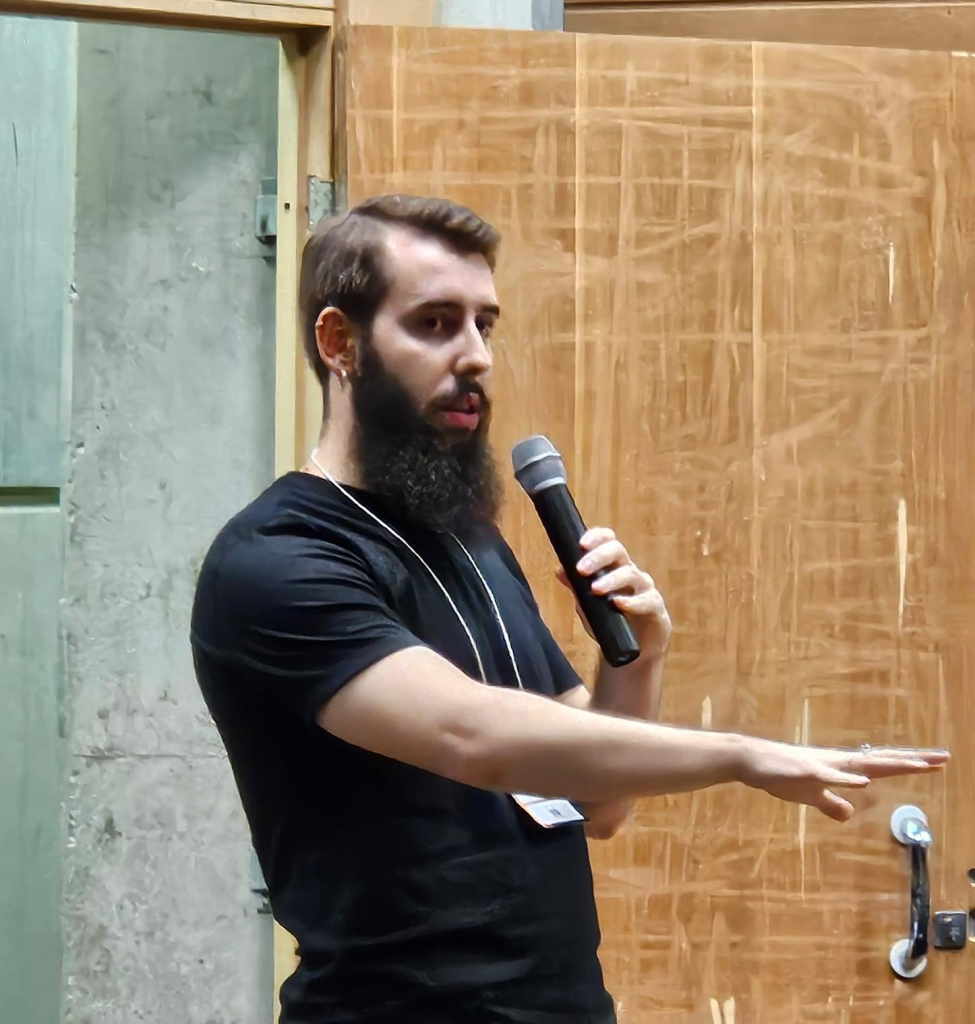
Gustavo H. Damiani
PhD Candidate at the Graduate Program in Philosophy at UFSC.
FAPESC Scholarship holder.
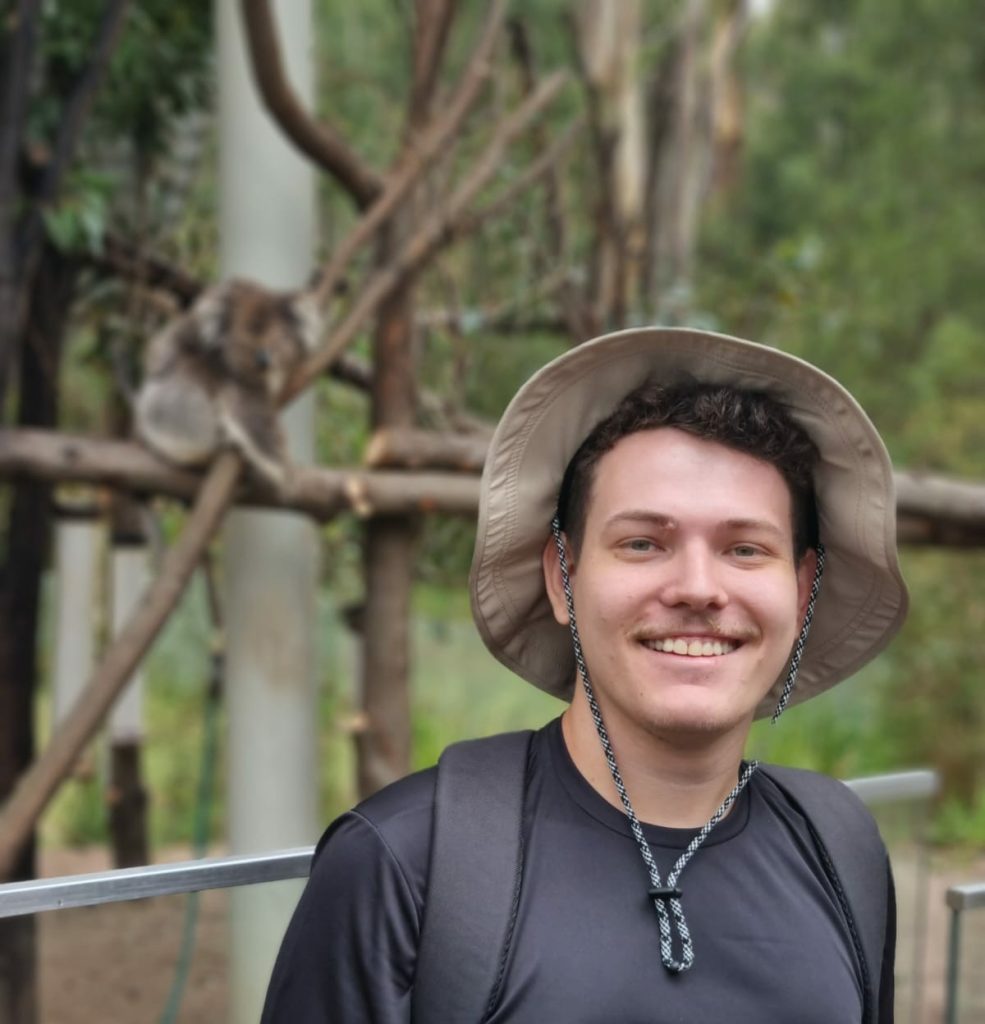
Rodrigo Stefanes
Undergraduate student in Mathematics at UFSC.

Mariana Pordeus
Undergraduate student in Philosophy at UFSC.
E-mail: <witch.organizers@gmail.com>
1st WITCH: <https://logicandlinguistics.ufsc.br/wp/witch-2025/>
2nd WITCH: <https://logicandlinguistics.ufsc.br/wp/witch2-2025/>
3rd WITCH: <https://logicandlinguistics.ufsc.br/wp/witch3-2026/>